Dual Diagnosis Treatment in Los Angeles for Co-Occurring Disorders
Substance use and mental health conditions treated together in one program.
Partial hospitalization (PHP) and intensive outpatient (IOP) programs with flexible scheduling options in Los Angeles.
Dual diagnosis can feel like being stuck in a loop, where mental health conditions make substance use harder to control, and substance use disorders make everything feel more unstable. Create Recovery Center’s dual diagnosis treatment in Los Angeles provides integrated clinical care for both concerns so you can lay a strong foundation for a whole-person, well-rounded recovery.
While dual diagnosis may be more complicated than one condition, the fact is that substance use and mental health concerns exacerbate and worsen each other, and the loop is hard to break on your own. So, treating only one condition leaves your healing journey unfinished, making recovery harder and the risk of relapse higher.
Create Recovery’s dual diagnosis rehab in Los Angeles uses evidence-based, personalized methods to offer a well-rounded path to a lasting recovery. Our dual diagnosis treatment is delivered through outpatient partial hospitalization and intensive outpatient programs, providing structured care while allowing flexibility for your needs. Our licensed clinical team treats both conditions in one plan.
We see you, we hear you, and we ensure the care you receive is for the WHOLE YOU.
Dual Diagnosis Program Facts
| Programs | Partial hospitalization (PHP), 6 to 8 hours a day, 5 days a week; intensive outpatient (IOP), 9 to 15 hours a week, morning or evening |
|---|---|
| Typical Length | Several weeks to a few months, based on your assessment and progress |
| Location | Los Angeles, serving Playa Vista, Culver City, Mar Vista, Venice, and Santa Monica |
| Insurance | PPO accepted |
| Start | Same-day admissions available, where appropriate |
| Who We Serve | Adults with substance use and co-occurring mental health conditions |
What Is Dual Diagnosis and Why We Treat Both Together
Dual diagnosis, or co-occurring disorders, refers to the presence of a substance use disorder and a mental health condition together. Common examples of dual diagnosis can be:
- Alcohol use disorder and anxiety disorders
- Cannabis use disorder and trauma/post-traumatic stress disorder (PTSD)
- Prescription misuse and attention-deficit/hyperactivity disorder (ADHD)
The two can develop separately or lead to one another, often due to genetics, trauma, and stress. In real life, this often looks like using substances to cope with emotional distress, while that same substance use makes those feelings more difficult to manage over time. At Create Recovery, one clinical team treats both at the same time, so neither one remains untreated to interfere with your recovery.

Who Dual Diagnosis Treatment Is For at Create Recovery
Here are some signs you or someone you know may need dual diagnosis treatment:
Signs of a Substance Use Disorder
- Intense, frequent cravings and urges to use substances
- Sudden behavioral changes, like secrecy or lying
- Risky actions, like driving under the influence
- Social withdrawal and isolation
- Feeling dependent on substances to cope with stress, anxiety, depression, trauma, or other concerns
- High tolerance for substances
- Experiencing withdrawal symptoms in the case of cutting down or stopping substance use
Signs of a Mental Health Condition
- Mood swings that worsen with substance use
- Confusion or disorientation
- Difficulty focusing
- Dropping performance in academics or a job
- Social withdrawal
- Self-harm or suicidal thoughts
If you or someone you know is experiencing suicidal thoughts or ideation, call 9-8-8 (U.S.) immediately.

When Mental Health Comes First
Some may struggle with anxiety, depression, trauma, or another condition long before substances enter the picture. If you drink or use to cope with symptoms, and that coping has begun to lead to problems of its own, this program is for you.
When these patterns overlap, they do not operate separately; they reinforce each other.
This is often where people feel stuck: managing symptoms on both sides without a clear path forward.
Our co-occurring disorder treatment in Los Angeles focuses on treating both these symptoms and conditions at the same time in outpatient care, at the PHP or IOP level depending on how severe your symptoms are. This lays the strong foundation you need for a lasting recovery.
Who It Is Not For
Create Recovery is an outpatient program. If you need medical detox or 24/7 care, we will clinically assess your symptoms, history, and needs, refer you to trusted providers, and we can help you step into our program afterward.
When It Does Not Feel Like Just One Problem
Many do not immediately recognize dual diagnosis because it does not always present clearly.
Instead, it often feels like:
- Using substances to manage anxiety, stress, or emotional overwhelm
- Feeling temporary relief, followed by worsening mental health symptoms
- Trying to address one concern, but the other continues to surface
- Cycles of improvement followed by setbacks that feel hard to explain
If this feels familiar, it may not be two separate challenges, but one interconnected pattern that needs to be treated together.
If you are unsure or just beginning to recognize these patterns, you don’t need to have everything figured out before reaching out.
Many people begin by simply understanding their options.

What Dual Diagnosis Treatment in Los Angeles Looks Like at Create Recovery
Dual diagnosis treatment is not just about adding more treatment; it is about coordinating care so both conditions are treated together, not separately. Here is how it happens at Create Recovery:
- It begins with a confidential call. You speak with our admissions team about what is going on. You do not need a diagnosis to call.
- We conduct a confidential clinical assessment. We look at your substance use concerns, mental health history, and current needs to decide where you begin.
- We provide one integrated plan in PHP or IOP. The same team treats both conditions.
- Our outpatient programs offer daily and weekly structure. Individual therapy, group therapy, medication management when needed, skills training, relapse prevention, and case management.
- You can step down as your needs evolve. Most clients move from PHP to IOP, then to aftercare to ease the transition to daily life.
What Is Included in Our Dual Diagnosis Program?
Our mental health and addiction treatment in Los Angeles includes the following.

Clinical Assessment and Treatment Plan
Every plan begins with a clinical assessment and personalized recommendation. It is reviewed as you heal and grow – as your needs evolve.

Behavioral Therapies
We use motivational interviewing, cognitive behavioral therapy and dialectical behavior therapy to change unhelpful thinking patterns and reduce self-destructive behaviors like substance use.

Medication Management
We provide medication management when it is needed, including medication-assisted treatment (MAT) for alcohol and opioid use disorders, coordinated with your therapy.
Holistic Practices
We use holistic practices to complement clinical practices and lay the foundation for lasting change. Nutrition, exercise, sleep, meditation, and mindfulness are used to build a lifestyle that prioritizes your recovery and mental health.
Group Therapy and Peer Community
Our group therapy sessions give you the community you need in your sobriety and mental health journey, with people who understand what you are going through.
Relapse Prevention
You learn to identify triggers and build a relapse prevention plan for high-risk moments.
Case Management
Our team helps with practical needs like housing, employment, and legal concerns.
Aftercare and Alumni
When you finish, you stay connected through aftercare planning and our alumni community.
Common Mental Health Conditions Treated Alongside Substance Use
As substance use disorder co-occurs at a high prevalence rate with a range of mental health conditions, we commonly treat the following mental health conditions alongside addiction:
- Anxiety disorders
- Panic disorder
- Major depressive disorder
- Bipolar disorders
- Chronic stress
- Trauma and post-traumatic stress disorder
- Attention-deficit/hyperactivity disorder
- Borderline personality disorder
- Antisocial personality disorder
- Schizophrenia
We treat these conditions alongside the following substances: alcohol, cannabis, opioids, stimulants, and prescription drugs.
PHP or IOP for Dual Diagnosis
Structured outpatient programs allow you to receive consistent clinical care while living at home or in a supportive environment. Those who need 24/7 care are referred to a higher level of care.
Partial Hospitalization Program (PHP)
PHPs are highly intensive outpatient programs. They run for 6 to 8 hours per day, 5 days per week. You can return to your home or a sober living after.Our Partial Hospitalization Program in Los Angeles is the beginning point when symptoms are unstable, or you need daily structure.
Intensive Outpatient Program (IOP)
IOPs are of lesser intensity than PHPs. They run for 9 to 15 hours per week and allow for more flexible scheduling and independence. You can return to your home or sober living after, and you can maintain your daily responsibilities while focusing on your recovery, too.Our Intensive Outpatient Program in Los Angeles is where you begin when symptoms are milder or school and work must continue. It is also a step-down from PHP.
If daytime does not work for you, our evening IOP meets after work hours, so a dual diagnosis IOP in Los Angeles can fit around your schedule.
Does Insurance Cover Dual Diagnosis Treatment in Los Angeles?
Create accepts most PPO plans, providing in-network and out-of-network benefits with Aetna, Cigna, Anthem, Blue Cross, and Tufts, among others.
To verify your coverage, call us at (855) 600-4420. Our team checks your benefits confidentially and tells you what it covers before you commit to anything.




Our Los Angeles Location
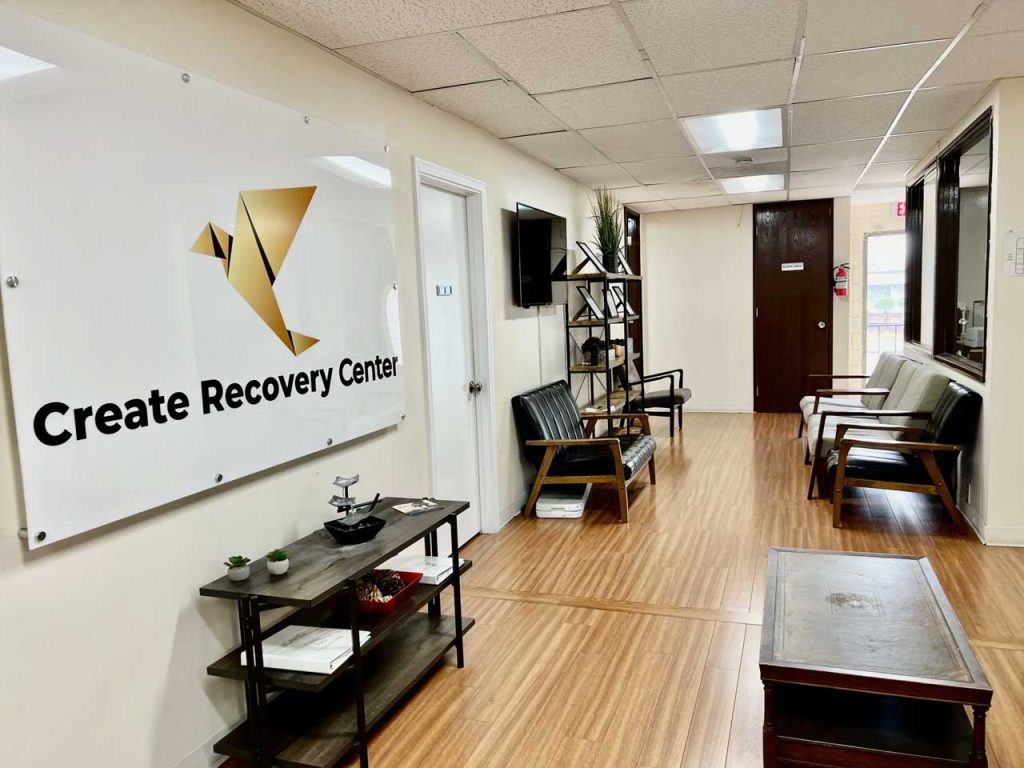
Create is located at 5300A Beethoven St Ste A, Los Angeles, CA 90066, United States. Clients from Playa Vista, Culver City, Mar Vista, Venice, and Santa Monica can also easily commute to our treatment center.
If you are coming from out of town, we can connect you with trusted transitional housing and sober living homes to make this transition easier for you.
How to Begin Your Healing Journey with Create Recovery?

Step 1
Call us at (855) 600-4420.

Step 2
Our team will verify your insurance and schedule your assessment to recommend the right level of care and a personalized treatment program.

Step 3
If you are okay with your treatment plan, you can go ahead with us. Same-day admissions are also available when appropriate.
Not Sure If Dual Diagnosis Treatment Is Right for You?
You do not have to navigate this on your own. A confidential conversation can help you:
- ✓Understand how both conditions are connected
- ✓Explore what level of care fits your situation
- ✓Take a clear next step forward
Reaching out does not mean committing to us right away. It is an information-gathering step that tells you where you are and what might be the next best step in your healing journey.
Frequently Asked Questions About Dual Diagnosis Treatment in Los Angeles
What is dual diagnosis treatment?
Dual diagnosis treatment focuses on treating both substance use and co-occurring mental health disorders together rather than one condition or the other, separately.
Can addiction and mental health conditions be treated together?
Addiction and mental health conditions can be treated together with behavioral therapies, medication management, skills training, relapse prevention, and peer community.
What if I am not sure whether substance use or the mental health condition came first?
That is common, and you do not need to know. We look at both conditions together, so the order matters less than getting the right care.
What programs offer dual diagnosis treatment?
At Create Recovery, you receive dual diagnosis treatment through outpatient partial hospitalization and intensive outpatient programs.
How long does dual diagnosis treatment typically last?
While recovery timelines may vary, dual diagnosis treatment typically lasts for several weeks to a few months.
Is dual diagnosis treatment covered by insurance?
Many private insurance policies fully or partially cover dual diagnosis treatment. You can call us at (855) 600-4420 to quickly check your coverage.
Can I get dual diagnosis treatment in the evening?
Our evening IOP allows you to receive dual diagnosis treatment after school or work.
How quickly can I begin?
Typically, you can begin within a few days after your initial call. Same-day admissions are also available when appropriate.
Do I need a diagnosis before I call?
No. The clinical assessment is the first step, and it helps us understand what you are dealing with.