Alcohol Use Disorder Treatment in Los Angeles
You can still be showing up for your studies, jobs, and loved ones, but still be struggling with alcohol. Create Recovery Center offers outpatient alcohol treatment in West Los Angeles with day, afternoon, and evening schedules, so getting the care you need and deserve fits right alongside your day-to-day life.


- Same-Day Admissions
- PPO Insurance Accepted
- Day & Evening IOP
- Licensed Clinical Team
- Same-Day Admissions
- PPO Insurance Accepted
- Day & Evening IOP
- Licensed Clinical Team
Is My Drinking a Problem?
This is one of the most common questions one may ask before they call, and it is a fair one. Alcohol is part of events, celebrations, and ordinary evenings, so the line between “a lot” and “too much” can become difficult to tell.
Alcohol use disorder (AUD) is a medical condition that is diagnosed by looking at how drinking affects your life, not just how much you drink. The questions below reflect the criteria clinicians use. In the past year, have you:
- Ended up drinking more, or for longer, than you meant to?
- Tried to cut back or stop and found you could not?
- Spent a lot of time drinking, planning to drink, or recovering from it?
- Felt strong cravings or a pull to drink?
- Let studies, jobs, family, or other responsibilities take a backseat because of drinking?
- Kept drinking even though it led to problems in your relationships?
- Given up things you used to enjoy in order to drink?
- Drunk in circumstances that were risky, such as before driving?
- Kept drinking even though it was impacting your health, sleep, or mood?
- Needed more alcohol to feel the same effect?
- Felt anxious, shaky, sweaty, or unwell when the alcohol wore off?
A couple of yeses can point to a mild disorder. Several suggest something more serious. Only a licensed clinician can diagnose AUD, but these questions are a useful place to begin with.
Alcohol Use Disorder Does Not Always Look the Way You Expect
Many hold off on getting the care they need and deserve because they do not match the picture they have in mind. They have a job, a home, and a family. They rarely miss out on anything. They tell themselves it cannot be that bad.
In a demanding lifestyle, where long hours and high expectations are common, alcohol is often the way you might unwind, and sometimes the way you cope. Common patterns may be:
- Drinking to Switch Off: The evening drinks that started as a way to unwind have become the only way to relax or fall asleep.
- Drinking to Cope: Alcohol is used to cope with stress, anxiety, and avoiding difficult conversations.
- Secretive Drinking: Counting drinks, drinking alone, or keeping the real amount of drinks from those close to you.
- Functioning, But at a Cost: Your tasks still get done, but mornings are rough, energy is low, and you are present less than you want to be.
None of these require you to experience a crisis to reach out. Getting the care you need and deserve while you keep your routine is often easier, and it protects what you have built.

Why Do You Need to Be Aware of Alcohol Withdrawal?
If you have been drinking heavily and regularly, reducing or stopping suddenly can be dangerous. Alcohol is one of the few substances where withdrawal can be life-threatening.
Withdrawal can begin within hours of your last drink, and symptoms can be:
- Anxiety and restlessness
- Shakiness
- Tremors
- Sweating
- Vomiting
- Sleep troubles
- Fast heartrate
In severe cases, withdrawal can lead to seizures or delirium tremens (DTs). DTs involve confusion, hallucinations, and unstable vital signs, and they are a medical emergency.
Call 9-1-1 immediately if you or someone else shows these signs.
As it is difficult to predict who will have a severe withdrawal, please do not try to stop on your own if you drink heavily. Speak with a licensed clinician first. When you call Create Recovery, our team will ask about your drinking history and help you understand whether you need medically supervised detox before starting outpatient care.
We do not offer detox. If you need detox before you begin outpatient treatment, we will refer you to trusted providers and admit you to our outpatient programs afterward.
How Do We Treat Alcohol Use Disorder?
Treatment at Create Recovery combines clinical care, medication-assisted treatment (MAT), and practical resources in one coordinated plan.
01
A Clinical Assessment
A licensed clinician looks at your drinking history, physical health, mental health, and what is going on in your life. This shapes the level of care we will suggest for you, and the plan can change as you do.
02
The Right Level of Care
Depending on your clinical evaluation, you may start in one of these:
Partial Hospitalization Program (PHP): It runs for 6-8 hours a day, 5 days a week. This is our most structured outpatient option, and it is ideal for those who need daily clinical oversight in early recovery, without needing hospitalization.
Intensive Outpatient Program (IOP): It runs for 9-15 hours a week, with day and evening options, built around work, school, and family. You can learn about our IOP here.
Evening IOP: It is designed for those who have demanding schedules during the day. See Evening IOP here.
Standard Outpatient Program (OP): OP offers weekly therapy and medical check-ins for alcohol use disorder, so that you can maintain your recovery. It is ideal for continued care after PHP or IOP.
None of these programs are distinct from each other. You can begin at PHP and step down to IOP or OP later. It depends on where you currently are in your recovery.
03
Medication-Assisted Treatment
For some, medication can make recovery easier by reducing cravings or lowering the risk of relapse. Several medications are U.S. Food and Drug Administration (FDA)-approved to treat alcohol use disorder.
If a medication is right for you, it is prescribed and monitored by your care team and used alongside therapy.
04
Evidence-Based Therapeutic Modalities
Drinking becomes an unhealthy coping mechanism to ease stress, numb difficult emotions, or to help you cope. Therapy enables you to understand these underlying reasons and build healthier ways to cope with them instead of resorting to substance use:
- Individual Therapy: One-on-one sessions with your therapist.
- Group Therapy: Clinician-led groups where you are surrounded by peers who understand where you are and where you want to be.
- Cognitive Behavioral Therapy (CBT): Identifies the thinking patterns and triggers that lead to drinking and develops practical responses.
- Dialectical Behavior Therapy (DBT): Develops skills for handling strong emotions without resorting to alcohol.
- Relapse Prevention Planning: A realistic plan for high-risk circumstances, built into every stage of your recovery.
05
Case Management and Continued Care
Our case managers coordinate for your practical needs such as housing, employment, and legal concerns. Before you finish treatment, we plan for what comes next and keep you connected to the Create Recovery alumni community.
When Alcohol and Mental Health Are Tied Together
Alcohol and mental health conditions often occur together. Stress, burnout, anxiety, depression, and trauma can all nudge someone toward drinking, and drinking tends to make each of them worse.
It can become a cycle. Alcohol takes the edge off in the moment, but it affects mood, disrupts sleep, and can intensify anxiety when you wake up. That sends you back to it for more relief.
Treating just the drinking, or just the mental health condition, often leaves the loop as it is. This is why Create Recovery treats both at once, under a single coordinated program led by licensed clinicians.

What Treatment Looks Like Around Your Life
Outpatient treatment means you go back to your home after scheduled hours of treatment and apply the skills you learned in daily life settings to reinforce a healthier way of living.
Outpatient treatment is not the weaker option – it offers both structure and flexibility and can be highly effective, provided it is the right level of care for your needs and goals.
It can also be an ideal fit:
If You Need More Structure Right Now
PHP gives you full days of intensive programming for stabilization purposes.
If You Work Full Time
Evening IOP can fit around your workday.
If You Are a Student
IOP schedules are built to work around classes and commitments.
If Your Schedule Changes
Your plan can step up or down as your needs change.
A typical treatment day involves individual and group therapy, skills practice, and check-ins with your care team. Exact schedules depend on your level of care and your personalized program.

If You Are Worried About Someone Else
Watching someone you love struggle with alcohol can be painful and confusing. You may not know whether to say something, or how.
A few things that tend to help:
- Choose a sober, relaxed moment. Avoid raising it when they have been drinking or when emotions are running high.
- Speak from care, not judgment. Describe what you have noticed and how it affects you, rather than blaming or guilting them.
- Expect resistance. Denial and defensiveness are common, but they do not mean the conversation failed. Every empathetic, open conversation you have is like a seed you sow.
- Offer a concrete next step. For instance, offer to sit with them while they call, or to help them verify insurance.
- Look after yourself. You cannot force someone to change, and your own health matters too.
You are welcome to call us on your own, even if your loved one is not ready. Our team can understand what your loved one needs and suggest the conversations you can have with them.
Why Choose Create Recovery Center
Certified by DHCS, certification #191020AP
Clinician-led programming from a licensed, credentialed team
Integrated care for alcohol use and mental health together
Day and evening IOP options
Same-day admissions when appropriate
PPO insurance accepted
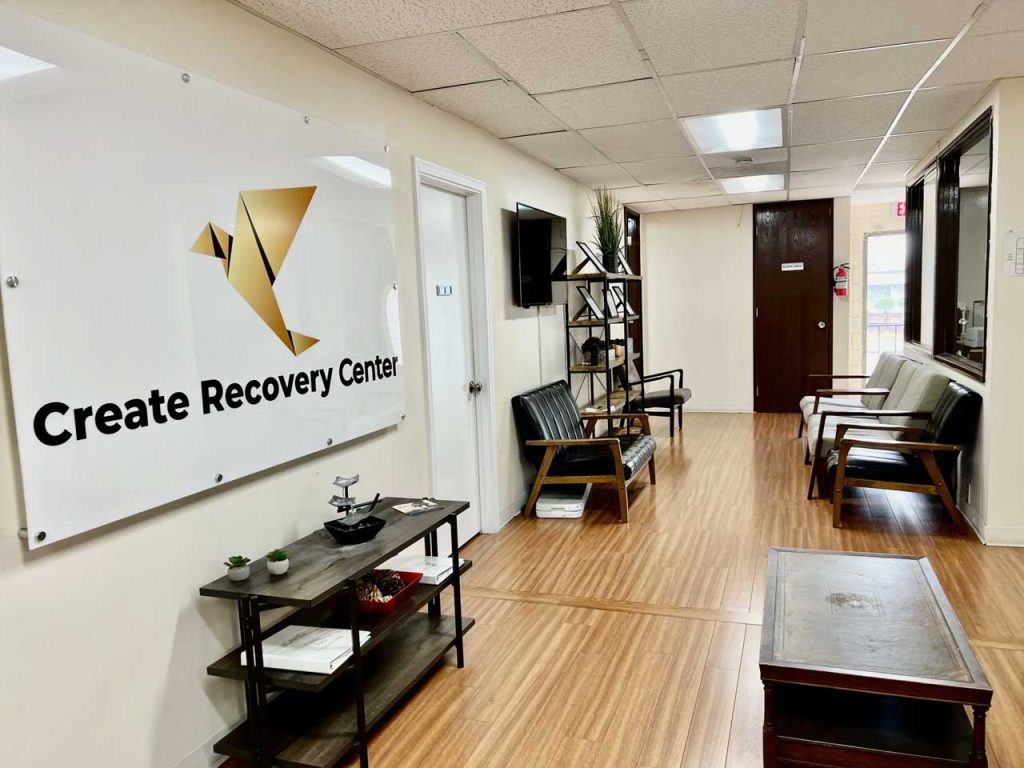
A boutique setting that feels more like an environment to slow down, reset, and focus rather than a treatment facility
Where Can You Find Us?
Create Recovery is located at 5300A Beethoven St, Ste A, Los Angeles, CA 90066, near Playa Vista and the Westside’s major employment centers. We also welcome clients from Culver City, Mar Vista, Venice, and Santa Monica.
Getting Started and Paying for Treatment
Most PPO insurance providers cover outpatient behavioral health treatment, including PHP and IOP. Our team will check your benefits quickly and confidentially, and explain what your plan covers in simple words. Verification is for your information only, and you do not have to commit to us right away to check the same.




How Can You Begin?

Call us at (855) 600-4420.
You can share with us what is going on. There is no judgment. We see you, and we want to hear from you.

Verify your insurance.
We confirm your PPO benefits.

Complete a clinical assessment.
Whenever you are ready to go forward, a licensed clinician understands your alcohol use, history, mental health needs, and other goals to recommend the right level of care.

Begin treatment.
Same-day and next-day admissions are available when appropriate.
You Can Take a Small Step Forward Today
You do not need to have everything figured out before you are ready to reach out. A call to Create Recovery is a way to find out where you stand and what your options are. Reaching out earlier leads to better outcomes.
Frequently Asked Questions About Outpatient Alcohol Use Disorder Treatment
Can I go to outpatient treatment if I drink every day?
It depends on your drinking history and current needs. If you drink heavily and daily, stopping suddenly can cause dangerous withdrawal, so a clinician will evaluate your needs first. Some need medical detox before starting outpatient care. You can reach out to Create Recovery at (855) 600-4420, and we will help you figure out what is safest.
Do I need to stop drinking before I call?
No. You can call while you are still drinking. Please do not stop abruptly on your own if you drink heavily. Let a clinician supervise that decision.
What is the difference between PHP and IOP?
PHP runs 6-8 hours a day, 5 days a week, and provides the most structure. IOP runs 9-15 hours a week with day and evening options. Both offer therapy, medication management, and relapse prevention, among other services.
Can I keep studying or working while in treatment?
Many clients do. IOP, and evening IOP in particular, is designed to fit around a school and work schedule. PHP is more time-intensive, so it is typically a better fit when you can step back from work during the day.
Do I have to quit alcohol completely?
Create Recovery’s abstinence-based approach seeks to lay the foundation for a completely sober, healthier life.
Will Create Recovery treat my anxiety or depression too?
Our dual diagnosis treatment addresses alcohol use and mental health concerns together under one coordinated plan.
What if I relapse?
Relapse is common in recovery and does not mean treatment has failed. It is a signal that your plan may need adjusting, and your care team can help you do that.
Will my insurance cover alcohol treatment?
Most PPO insurance policies cover outpatient behavioral health treatment. We verify your specific benefits confidentially before you begin.
How quickly can I start?
We offer same-day and next-day admissions when appropriate. After you call, we move quickly through insurance verification and clinical assessment.