

Finding out you are pregnant while taking methadone can bring up difficult questions. You may worry about your baby’s health, wonder about neonatal abstinence syndrome, or feel that becoming medication-free before delivery would be better for your pregnancy.
Those concerns are understandable, but changing or stopping methadone on your own can introduce risks of its own. For people with opioid use disorder (OUD), current guidance from organizations including the American College of Obstetricians and Gynecologists (ACOG) and the Substance Abuse and Mental Health Services Administration (SAMHSA) generally supports continuing medication treatment during pregnancy rather than routinely encouraging withdrawal.
That does not mean every person needs the same dose throughout pregnancy. Pregnancy can change how the body processes methadone, and some patients may need adjustments, including split dosing. The goal is an individualized treatment plan that supports maternal stability, prenatal care, and recovery while also preparing for the baby’s care after delivery.
For more information about substance use, treatment, and recovery during pregnancy, visit our pregnancy and substance use resource center.
Wanting Off Methadone Does Not Make You Bad
Wanting to stop methadone does not mean you are failing at recovery or that you do not care about your baby.
Pregnancy can make concerns about medication feel especially intense. You may have heard that methadone exposure can contribute to neonatal abstinence syndrome (NAS). When withdrawal symptoms are specifically related to prenatal opioid exposure, clinicians increasingly use the term neonatal opioid withdrawal syndrome (NOWS). You may also worry that remaining on methadone means your baby will experience withdrawal after birth.
These fears deserve to be discussed openly with your healthcare team. However, the possibility of NAS or NOWS does not automatically mean that stopping methadone during pregnancy is the safer choice.
Methadone is an established treatment for OUD during pregnancy. ACOG describes opioid agonist pharmacotherapy as an approach that can help prevent withdrawal, reduce cravings and illicit opioid use, and support engagement with prenatal and addiction care.
NAS/NOWS is a condition that some opioid-exposed newborns experience after birth. Symptoms can include irritability, tremors, difficulty feeding, vomiting, diarrhea, changes in sleep, or difficulty being consoled. Newborns can be monitored and treated with supportive measures and, when clinically necessary, medication.
The important distinction is between a known and monitorable potential neonatal effect and the possible consequences of destabilized or untreated OUD.
If you are thinking about reducing your methadone dose, bring that concern to the clinician managing your OUD and your prenatal care provider. You can discuss why you want to taper, what concerns you have about the medication, whether your current dose is controlling withdrawal and cravings, and whether another treatment approach might be appropriate.
Wanting a different treatment plan is not something you need to feel ashamed about. The safer approach is to make that decision with appropriate medical support rather than attempting a taper alone.
Why ACOG and SAMHSA Advise Continuing?
For people with OUD, medication for opioid use disorder (MOUD), historically also called medication assisted treatment, is intended to reduce withdrawal and cravings and support continued recovery.
ACOG identifies methadone and buprenorphine as medications used to treat OUD during pregnancy. Its guidance notes that opioid agonist treatment can help prevent withdrawal and reduce risks associated with untreated OUD while supporting engagement with prenatal and addiction treatment.
SAMHSA’s clinical guidance similarly emphasizes maintaining stability during pregnancy. Its guidance indicates that pregnant patients with OUD generally should not be encouraged to withdraw from pharmacotherapy during pregnancy or shortly after delivery because withdrawal can be difficult to sustain and may be followed by a return to opioid use.
If you are researching methadone while pregnant, it is important to understand that the goal of treatment is not simply to minimize medication exposure, but to support stability, reduce withdrawal and cravings, and keep you engaged in appropriate prenatal and OUD care.
That recommendation does not mean a clinician can never reduce or change methadone. Treatment decisions are individualized. A patient may have concerns about side effects, sedation, medication interactions, access to treatment, or a preference to eventually discontinue medication.
The important distinction is between a planned treatment adjustment and self-tapering.
If a taper is considered appropriate, a medical professional can monitor withdrawal symptoms, cravings, functioning, and other pregnancy-related factors. If symptoms become difficult to manage, the treatment plan can be reassessed.
There is also no general reason to reduce methadone solely because of concern about NOWS. ACOG notes that studies have not consistently demonstrated that lower maternal methadone doses result in less severe or shorter neonatal withdrawal.
For someone considering methadone while pregnant, the central question is therefore not simply, “How quickly can I get off this medication?”
A more useful question may be: “What treatment approach can help me remain stable and engaged in prenatal and recovery care?”
For some patients, that may mean continuing methadone throughout pregnancy.
What Self-Tapering Does to Relapse Risk?
Self-tapering can seem logical: reduce the dose gradually, tolerate withdrawal symptoms, and eventually stop.
The difficulty is that opioid withdrawal can involve more than physical discomfort.
As methadone is reduced, some people may experience cravings, anxiety, insomnia, gastrointestinal symptoms, irritability, restlessness, or other withdrawal symptoms. If those symptoms become difficult to manage, a person may be more vulnerable to returning to opioid use.
SAMHSA’s guidance discusses the potential for withdrawal and return to substance use during opioid agonist medication tapering. If a taper results in significant withdrawal or contributes to a return to substance use, treatment may need to be reconsidered and the patient stabilized.
A return to opioid use during pregnancy can create a less predictable pattern of exposure and withdrawal. It may also increase overdose concerns, particularly when opioid tolerance has changed.
This is one reason medication treatment is different from simply “replacing one opioid with another.” Methadone is used within a structured treatment approach to help reduce withdrawal and cravings and support recovery.
An opioid treatment program (OTP) may provide more than medication. Depending on the program and the patient’s circumstances, services can include counseling, recovery support, care coordination, and connections to other healthcare services.
Some patients may also qualify for take-home doses when program requirements and clinical circumstances allow. SAMHSA explains that stable patients may be eligible for take-home methadone under applicable program rules.
If you are already taking methadone and become pregnant, talk with the clinician managing your OUD and your prenatal care provider before changing your dose.
If you are researching suboxone while pregnant, it is important to distinguish the brand medication from buprenorphine alone. Suboxone contains both buprenorphine and naloxone, while other medications contain buprenorphine without naloxone. Buprenorphine is an established medication treatment for OUD during pregnancy, but decisions about continuing, changing, or switching a buprenorphine-containing medication should be individualized with qualified healthcare professionals. Switching from methadone to buprenorphine also requires medical supervision because an improperly timed transition can trigger withdrawal.
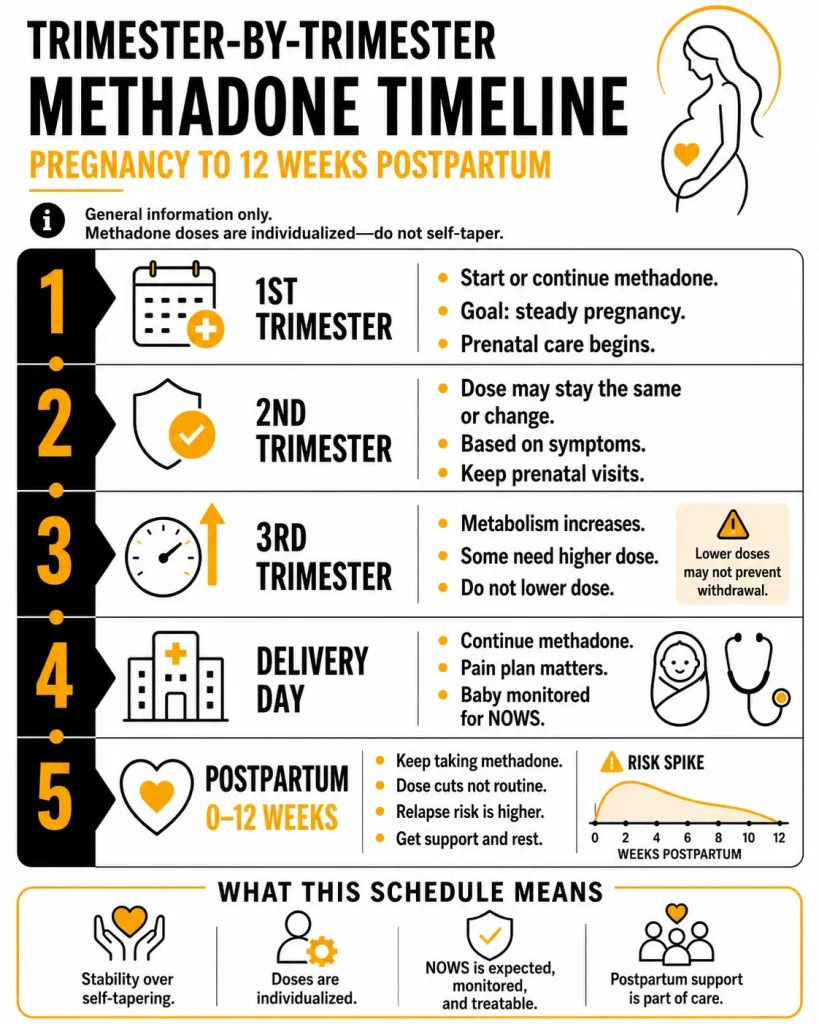
Third-Trimester Metabolism and Split Dosing
Pregnancy can change how medications move through and are eliminated from the body.
This matters because a methadone dose that worked well before pregnancy—or earlier in pregnancy—may not provide the same level of symptom control later in pregnancy.
ACOG notes that physiologic changes during pregnancy can affect methadone metabolism and that dose adjustments may sometimes be needed, particularly during the third trimester. For some patients, split dosing may help maintain more consistent symptom control.
This is where plasma clearance becomes relevant. Changes in pregnancy can affect how quickly certain medications are processed and cleared from the body. If methadone does not maintain its effects for the full dosing interval, withdrawal symptoms or cravings may return before the next scheduled dose.
You might notice:
- Increased opioid cravings
- Restlessness or anxiety
- Sleep difficulties
- Nausea or abdominal discomfort
- Irritability
- Other withdrawal symptoms
These symptoms do not necessarily mean that treatment has stopped working. They may indicate that your clinician should reassess your dose or dosing schedule. Contact your treatment team if you notice increasing cravings, withdrawal symptoms before your next dose, unusual sedation, missed doses, difficulty accessing your opioid treatment program, or concern that your current dosing schedule is no longer working.
Split dosing involves dividing the total daily methadone dose into separate doses rather than taking it all at once. It should only be done according to the treatment plan established by the prescribing clinician or OTP.
The objective is not automatically to increase medication. It is to find a dosing approach that provides adequate symptom control while limiting unnecessary withdrawal and instability.
If you are experiencing cravings or withdrawal during pregnancy, tell your treatment team rather than reducing your dose or changing your dosing schedule independently. ACOG recommends clinically appropriate dose adjustments when withdrawal symptoms occur.
Delivery Day and Finnegan Scoring
Being on methadone does not necessarily mean that treatment should be stopped when labor begins.
ACOG recommends that patients receiving methadone or buprenorphine generally continue their maintenance medication during labor, with additional pain management provided when needed. Because opioid tolerance can affect pain control, discussing the delivery plan with the obstetric and anesthesia teams ahead of time can be helpful.
Your baby’s healthcare team should also know about prenatal opioid exposure.
After birth, the newborn may be monitored for NAS or NOWS. The timing and severity of symptoms can vary from one infant to another.
Hospitals have used structured assessment tools such as the Finnegan score or Finnegan Neonatal Abstinence Scoring Tool to assess newborn withdrawal symptoms. The tool considers signs such as tremors, excessive crying, feeding difficulties, gastrointestinal symptoms, changes in sleep, and muscle tone.
Some hospitals now use the Eat Sleep Console approach instead. Rather than relying primarily on a numerical score, this approach focuses on whether a newborn can eat effectively, sleep adequately, and be consoled.
The specific approach depends on the hospital and clinical team.
The important point is that monitoring for NOWS does not mean that something has necessarily gone wrong. Newborns can receive supportive care, which may include rooming-in, skin-to-skin contact, swaddling, reducing unnecessary stimulation, and feeding support. Some infants may require medication depending on their symptoms and clinical assessment.
Understanding the hospital’s newborn monitoring process before delivery can make the experience less uncertain.
Outpatient Care Through Postpartum
Delivery is not the end of recovery treatment.
The postpartum period can introduce new challenges, including sleep deprivation, changes in routine, breastfeeding concerns, financial pressure, relationship changes, and the demands of caring for a newborn.
Continuing treatment and recovery support can help make this transition more manageable.
ACOG recommends postpartum psychosocial support, substance use disorder treatment, and relapse-prevention services for women with OUD.
The postpartum period can also represent an important postpartum overdose window. Research has identified continued opioid overdose vulnerability throughout the first year after delivery, with some studies finding particularly high risk later in the postpartum year. This is one reason ongoing OUD treatment, overdose-prevention planning, and follow-up remain important well beyond the immediate weeks after birth.
Continuing methadone while pregnant and into the postpartum period may be appropriate for some patients, but any dose changes should be discussed with the treatment team rather than made independently.
If your dose was adjusted during pregnancy, your clinician can determine whether another adjustment is appropriate after delivery. There is not a universal postpartum dose that applies to everyone.
Outpatient support may include an OTP, counseling, medication management, postpartum medical care, recovery meetings, peer support, and behavioral health services.
For people who have difficulty attending appointments in person, virtual outpatient treatment may provide another option for continuing structured support. You can learn more about virtual intensive outpatient care or review the admissions process to understand available treatment pathways.
The Bottom Line
If you are taking methadone while pregnant, wanting to eventually stop does not make you a bad mother or a failure in recovery.
But self-tapering can introduce risks that are difficult to predict, particularly if reducing the medication leads to significant withdrawal, increased cravings, or a return to opioid use.
ACOG and SAMHSA guidance generally supports maintaining medication treatment for OUD during pregnancy rather than routinely encouraging withdrawal. Methadone doses may sometimes need to be adjusted during pregnancy, particularly as metabolism changes later in pregnancy, and split dosing may be considered for some patients.
After delivery, your baby can be monitored for NAS/NOWS using approaches such as the Finnegan score or Eat Sleep Console, depending on the hospital. These symptoms can be managed with appropriate newborn care.
Recovery also continues beyond delivery. Maintaining appropriate OUD treatment and postpartum support may be especially important during the months after birth, when stress and other changes can affect recovery.
If you are considering reducing or stopping methadone, start the conversation with the clinician managing your OUD and your prenatal care team. A supervised, individualized plan is different from tapering on your own.
You do not have to choose between caring about your baby and caring for your recovery. Both deserve attention.