
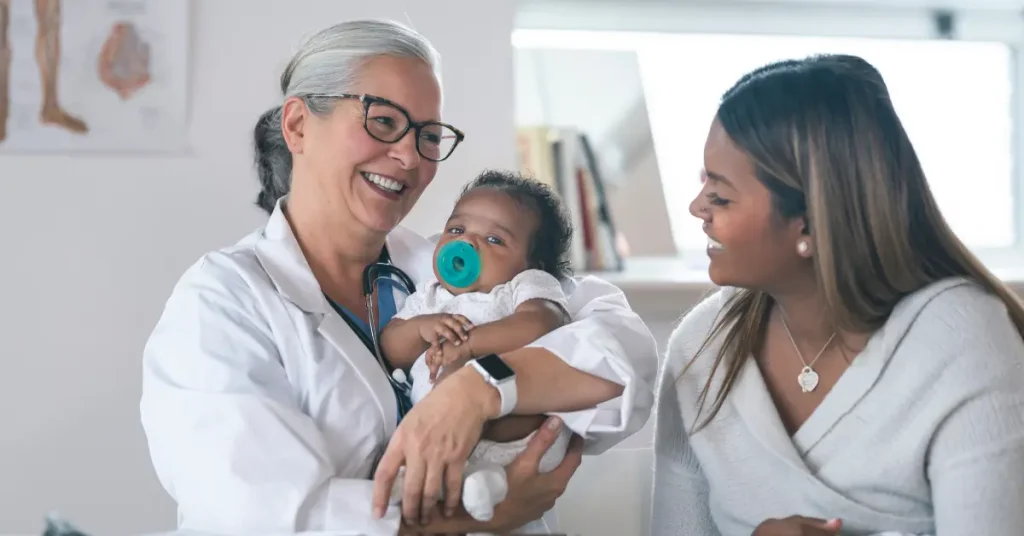
If you are a new mom worried about your drinking, asking your OB, primary care doctor, or another medical provider about naltrexone for alcohol does not, by itself, require that provider to report you to Child Protective Services in California.
Naltrexone is an FDA-approved medication for alcohol use disorder (AUD). It is an opioid antagonist, it is not addictive, and asking about it is not itself evidence of child abuse or neglect. California’s mandated reporting law, known as CANRA, requires clinicians to report when they know or reasonably suspect that a child has been abused or neglected.
There are limits to medical confidentiality, and alcohol use can create real safety concerns in some situations. But asking for treatment is not the same as admitting to abuse or neglect.
For more information about recovery during motherhood, visit our Motherhood and Recovery hub.
Asking for naltrexone is not reportable by itself
A request for naltrexone is a request for medical care.
You might tell your doctor, “I’ve been drinking more since the baby was born, and I’m having trouble cutting back. Could naltrexone help?”
By itself, that statement would not ordinarily establish the reasonable suspicion of child abuse or neglect required for a mandatory report.
For mothers researching naltrexone for alcohol, it is important to understand that asking about medication is different from reporting an unsafe situation. A clinician may discuss medication options, counseling, or other forms of medication assisted treatment based on your individual needs.
Naltrexone is one of three FDA-approved medications for AUD, along with acamprosate and disulfiram. Oral naltrexone is taken as a tablet. Extended-release injectable naltrexone is sold under the brand name Vivitrol and is usually given monthly.
Before prescribing, a clinician may ask how much and how often you drink, whether you have withdrawal symptoms, whether you use opioids, what medications you take, whether you are breastfeeding, and whether you have liver or mental health concerns.
These are normal medical questions. They do not mean your doctor is preparing a CPS report.
The situation changes if a clinician learns facts that create reasonable suspicion of child abuse or neglect. For example, asking for help with increasing drinking is different from repeatedly leaving an infant without safe supervision while severely intoxicated.
What CANRA requires of an OB or PCP
California’s Child Abuse and Neglect Reporting Act, or CANRA, makes physicians and many other health professionals mandated reporters.
A mandated reporter must report when, in a professional capacity, they know or reasonably suspect that a child has been the victim of abuse or neglect.
That is not the same as saying, “A parent drinks alcohol,” or, “A parent asked for medication to help reduce drinking.”
California law also provides an important distinction in another substance-related context. A positive toxicology screen at an infant’s delivery is not, by itself, sufficient grounds for a child abuse or neglect report. Other risk factors must be assessed.
For a postpartum mother speaking with an outpatient doctor, the practical answer is simple:
There is no California rule that says asking for naltrexone automatically requires your OB or PCP to report you to CPS.
A report can become necessary if other facts create reasonable suspicion of abuse or neglect. Because that depends on the individual situation, no clinician can promise unlimited confidentiality in every circumstance.
If drinking has become hard to control, seeking care early is appropriate. Learn more on our alcohol addiction page.
42 CFR Part 2 once you enroll
Privacy becomes more complicated when specialty addiction treatment is involved.
42 CFR Part 2 is a federal confidentiality law that provides special protections for records identifying a person as having or having had a substance use disorder when those records are maintained by a qualifying federally assisted SUD treatment program.
One distinction matters:
A naltrexone prescription written by an ordinary OB or primary care doctor does not automatically become a 42 CFR Part 2 record simply because the medication treats alcohol use disorder.
Part 2 generally applies to records created or maintained by qualifying SUD programs. Records held by a regular physician who is not acting as a Part 2 program may instead be governed primarily by HIPAA, California privacy law, and other applicable rules.
If you enroll in a qualifying SUD treatment program, its records may receive Part 2’s additional protections.
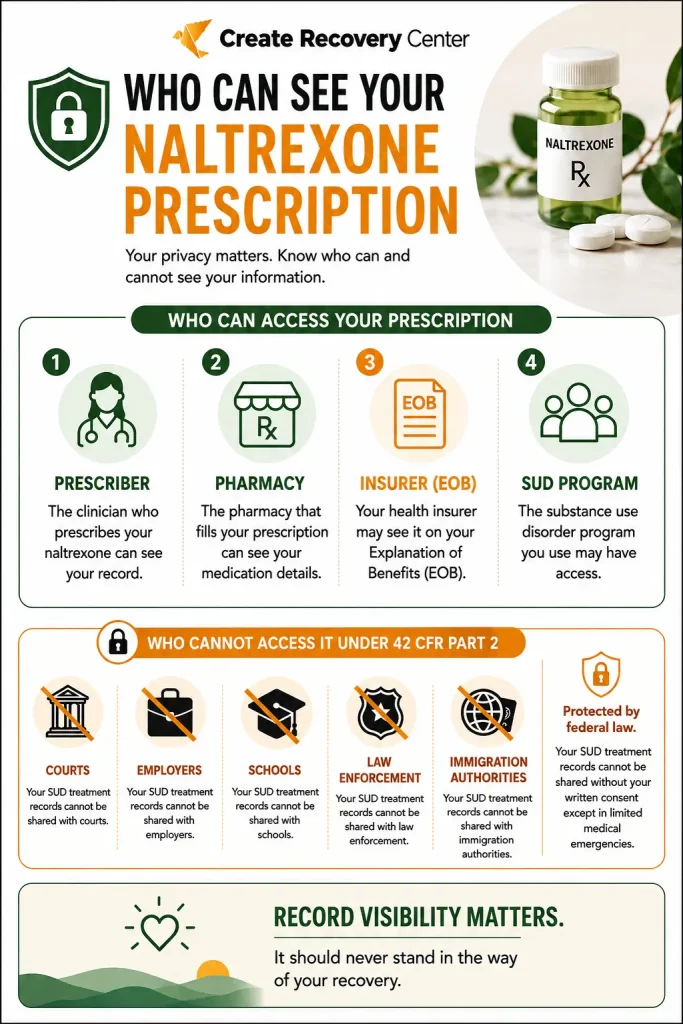
Who can see your naltrexone prescription?
Your prescriber will know what was prescribed and will usually document it in your medical record.
Your pharmacy will maintain a dispensing record.
If you use insurance, your health plan, pharmacy benefit manager, or claims processor may receive information needed to process and pay for the prescription.
If you receive care through a qualifying SUD program, identifying treatment records maintained by that program may receive additional protection under 42 CFR Part 2.
What does not happen simply because you request naltrexone for alcohol is the creation of a public list of mothers taking medication for AUD. Naltrexone is also not a federally controlled substance.
How naltrexone and the Sinclair Method work?
Naltrexone is an opioid antagonist. It blocks opioid receptors involved in some of alcohol’s rewarding effects. For some people with AUD, this can reduce cravings, heavy drinking, or the sense of reward associated with alcohol.
It does not usually make someone sick if they drink alcohol while taking it. That mechanism is associated with disulfiram, which interferes with alcohol metabolism and can cause unpleasant reactions when alcohol is consumed.
Daily oral naltrexone
Oral naltrexone is commonly prescribed for daily use. Some patients can start it while they are still drinking, depending on clinical assessment.
For someone considering naltrexone for alcohol, a clinician will determine whether oral treatment is appropriate based on medical history and current circumstances.
It is not appropriate for everyone. A doctor will consider opioid use, liver health, other medications, pregnancy or breastfeeding, and other medical factors.
Vivitrol
Vivitrol is the extended-release injectable form of naltrexone.
For alcohol dependence, prescribing guidance states that patients should be able to abstain from alcohol before beginning Vivitrol and should not be actively drinking at the time of the first injection.
This is one reason advice about oral naltrexone should not automatically be applied to the injectable form.
The Sinclair Method
The Sinclair Method is a commonly used term for a targeted naltrexone approach.
Instead of taking naltrexone on the same schedule every day, targeted dosing involves taking oral naltrexone in anticipation of drinking.
The idea is that reducing alcohol’s opioid-mediated reward may weaken learned reinforcement over time. Research has found benefits in some targeted-dosing outcomes, although naltrexone’s broader evidence base is stronger than that for one named protocol.
The Sinclair Method should not be presented as a guaranteed cure or the only evidence-based way to use naltrexone. Anyone considering targeted dosing should discuss it with a clinician familiar with AUD treatment.
Opioid use and hepatic monitoring
Because naltrexone blocks opioid receptors, current or recent opioid use is an important safety issue.
Starting naltrexone in someone who is physically dependent on opioids can trigger withdrawal. It can also interfere with opioid pain treatment, which may matter after a cesarean delivery, surgery, or injury.
Doctors also consider liver health. Hepatic monitoring may include liver function tests before or during treatment, depending on medical history, symptoms, and other risk factors.
Postpartum and breastfeeding questions
Being postpartum does not automatically rule out naltrexone.
Current LactMed guidance states that limited data suggest naltrexone is minimally excreted into breast milk and that a maternal need for naltrexone is not, by itself, a reason to stop breastfeeding.
That does not mean every breastfeeding mother should automatically take it. A clinician should consider the severity of alcohol use, infant age and health, other medications, opioid exposure, liver health, and whether oral or injectable naltrexone is being considered.
The risks of continued heavy drinking also matter, including intoxication, withdrawal, sleep disruption, and impaired judgment.
Postpartum depression and alcohol
Postpartum depression and alcohol can overlap.
Some mothers drink more to cope with anxiety, low mood, loneliness, insomnia, trauma symptoms, or the stress of caring for a newborn.
Alcohol may feel calming in the short term, but relying on it can reinforce a cycle in which distress triggers more drinking. A clinician may also assess depression, anxiety, trauma symptoms, suicidal thoughts, sleep disruption, other substance use, relationship stress, and safety concerns.
When AUD and another mental health condition occur together, coordinated treatment can address both.
Why medication plus IOP may help some people?
Medication can address part of alcohol use disorder, but it cannot change every factor that keeps drinking going.
Naltrexone cannot arrange childcare, resolve relationship conflict, or teach new ways to manage stress. That is where behavioral treatment can help.
An intensive outpatient program, or IOP, provides more structured treatment than occasional medication appointments while allowing many patients to continue living at home. Depending on the program, treatment may include cognitive behavioral therapy, motivational interventions, relapse prevention, counseling, psychiatric care, coping skills, and medication management.
Not every woman taking naltrexone needs an IOP.
Treatment intensity should match drinking severity, withdrawal risk, mental health symptoms, previous treatment history, home environment, available support, and practical needs such as childcare.
For someone with more severe AUD, repeated unsuccessful attempts to cut down, significant postpartum depression or anxiety, or limited recovery support, combining medication with structured therapy may address more of the factors maintaining alcohol use.
The term medication assisted treatment is sometimes used broadly for combining medication with counseling or behavioral care. For alcohol use disorder, you may also see medications for alcohol use disorder, or MAUD.
Medication can reduce one barrier while therapy helps address triggers, coping skills, relationships, and routines. Learn more on our addiction therapy page.
You can ask for help before things become a crisis
You do not need to wait for a DUI, hospitalization, relationship breakdown, or unsafe parenting incident before asking your doctor about naltrexone for alcohol.
In California, asking an OB or PCP for naltrexone does not, by itself, meet the standard for a mandatory child abuse or neglect report.
Your doctor still has reporting obligations if there is reasonable suspicion that a child has been abused or neglected. Medical confidentiality also has other legal exceptions.
But those exceptions should not be confused with the idea that saying, “I’m drinking more than I want to and I need help,” automatically puts a mother on a CPS list.
Naltrexone, Vivitrol, acamprosate, disulfiram, behavioral therapy, and structured outpatient treatment can all play roles in AUD care. The right approach depends on your drinking pattern, medical history, breastfeeding status, mental health, opioid exposure, liver health, treatment goals, and level of support.
Asking for treatment is not the same as admitting to child abuse or neglect. It is asking for medical care.